FRed Lobster 100 Rulebook
Official competition rules and technical regulations for the FRed Lobster 100.
Enter at Your Own Risk
The idea behind this race is not one of the smartest we've had. Whether you're racing or watching, you're doing so at your own risk.
Printable Version
📄 Download / Print Full Rulebook
Opens a single combined page of the entire rulebook. Use your browser’s Print → Save as PDF and choose Letter paper size.
Start Here
- Quick Reference — One-page summary of the most important rules
- Race Rules Overview — Full breakdown of the rules
Rule Sections
| Section | What's Covered |
|---|---|
| Safety | Flags, equipment, pit rules, recommendations |
| Vehicle Classes | Allowed cars, tires, basic requirements |
| Technical Specifications | Bumpers, radiator protectors, transponders |
| Race Procedures | Teams, drivers, registration, RACEceiver |
| Penalties & Claims | Claim process and amounts |
Need Gear?
- RACEceiver on Amazon
- Extra Batteries
- Also available at Day Motorsports in Tyler
Full Rules
This page includes the full rule sections from the separate rule documents below. Any change made to the individual rule files will appear here the next time the site is built.
Safety
Safety is taken seriously, even if the race itself is not. The Head of Safety has the final say on all safety-related decisions.
Required Safety Equipment
- A seat belt, door, and helmet are required for everyone riding in the car.
- Helmets must be DOT approved with a chin strap.
- No batting helmets, bicycle helmets, or hard hats. Those are not legal headgear.
- One fire extinguisher in every car, and one in the pit for every team.
- At least one working brake light when the race starts.
Flags
| Flag | Meaning | Action |
|---|---|---|
| Red | Stop immediately | Pull over and stop. Repeat offenders can expect severe punishment and public embarrassment (TBD). |
| Black | Exit the track | Go to the pits immediately. |
Pit Stops Are Mandatory
You must make a pit stop for any of the following:
- A flat tire
- Causing a red flag
- Multiple non-stops on a red flag
Pit Area Rules
- A valid driver’s license is required to be in the pit area.
- No kids allowed in the pits.
- No weapons of any kind.
- Pit area is limited to one car length in width.
- ATVs, UTVs, and golf carts are allowed for utility work only on race day.
Recommendations
These are not required, but strongly suggested:
- Roll bars.
- Designate a driver, or plan to stay and camp.
- Disengage the air bags.
Conduct
- Rubbing is racing, but be smart about it. This is not a demolition derby.
- Head of Safety decisions are final.
Vehicle Classes
Cars & Trucks
- 4-cylinder vehicles only. No rotary-type engines.
- 2-wheel-drive vehicles only.
- You must have at least one working brake light when the race starts.
- A seat belt, door, and helmet are required for everyone riding in the car. Helmets must be DOT approved with a chin strap. No batting helmets, bicycle helmets, or hard hats; Those are not legal headgear.
- Bumpers. See bumper rules below.
- One fire extinguisher in every car, and one in the pit for every team.
- Unaltered street-tread tires only. No mud terrain, no all terrain, no snow tires.
- All rear-wheel-drive vehicles must start the race with mud flaps.
Simple Summary
4-cylinder, 2WD, street tires, DOT helmet, working brake light, fire extinguisher, and legal bumpers. That’s the core of it.
Technical Specifications
This page covers bumpers, radiator protectors, and transponders.
Bumper Rules
Stock Bumper Preference
Using the original stock bumper is the easiest and preferred option. With this choice, you’ll need to remove the plastic cover.
Permitted Options
Front and rear bumpers are limited to one of the following:
- Original stock bumpers, front and rear.
- A one-piece fabricated bumper constructed of only one (1) single beam/bar, no larger than 1.5″ schedule-40 pipe (2.0" OD), or 2″ × .120 square tubing. Multiple horizontal bars or stacked multi-beam structures are not permitted.
Mounting & Attachment Constraints
- Main supports (Figure 1): Fabricated bumpers must attach to the vehicle frame or chassis using a maximum of two (2) main mounting pillars or posts.
- No chassis reinforcement: The bumper assembly must function strictly as a bumper structure and cannot be used to brace, reinforce, or tie together the vehicle frame, unibody, engine mounts, or other components.
- Side/flank supports (Figure 2): Additional support braces extending to the outer flanks or turned ends are mandatory on side flanks for fabricated bumpers. Each flank must include a minimum of one (1) reinforcement, and supports may connect to either the main bumper structure/posts or the vehicle frame/chassis.
- Note: Side/flank supports are not considered additional chassis reinforcements. They are intended to prevent the bumper ends from flaring out or protruding in the event of an impact.
- Note on Stock Bumpers: Side flanks or turned ends may optionally be added to an original/stock bumper. If added, they must follow the same criteria as fabricated flank supports, limited to only one (1) beam, bar, or tube per side.
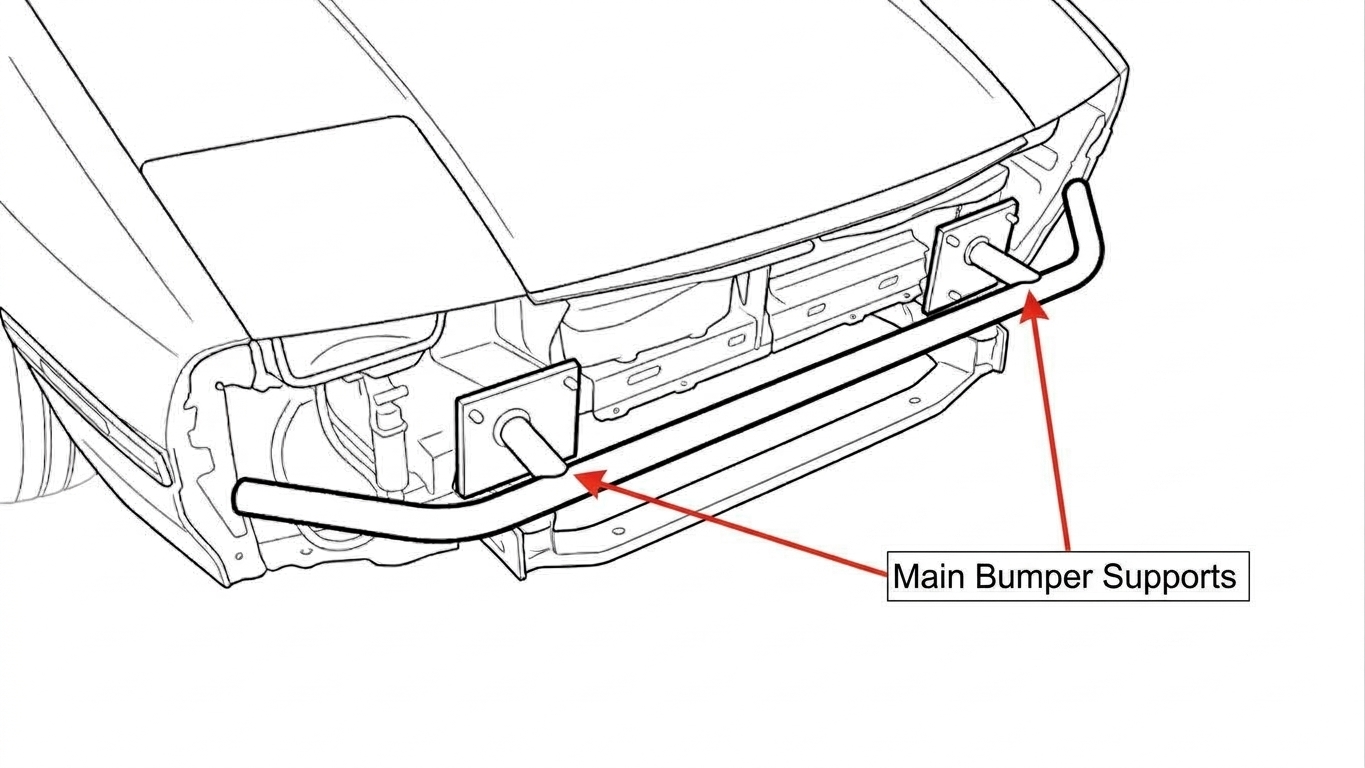
Figure 1. Two main bumper support pillars or posts attaching the bumper to the chassis.
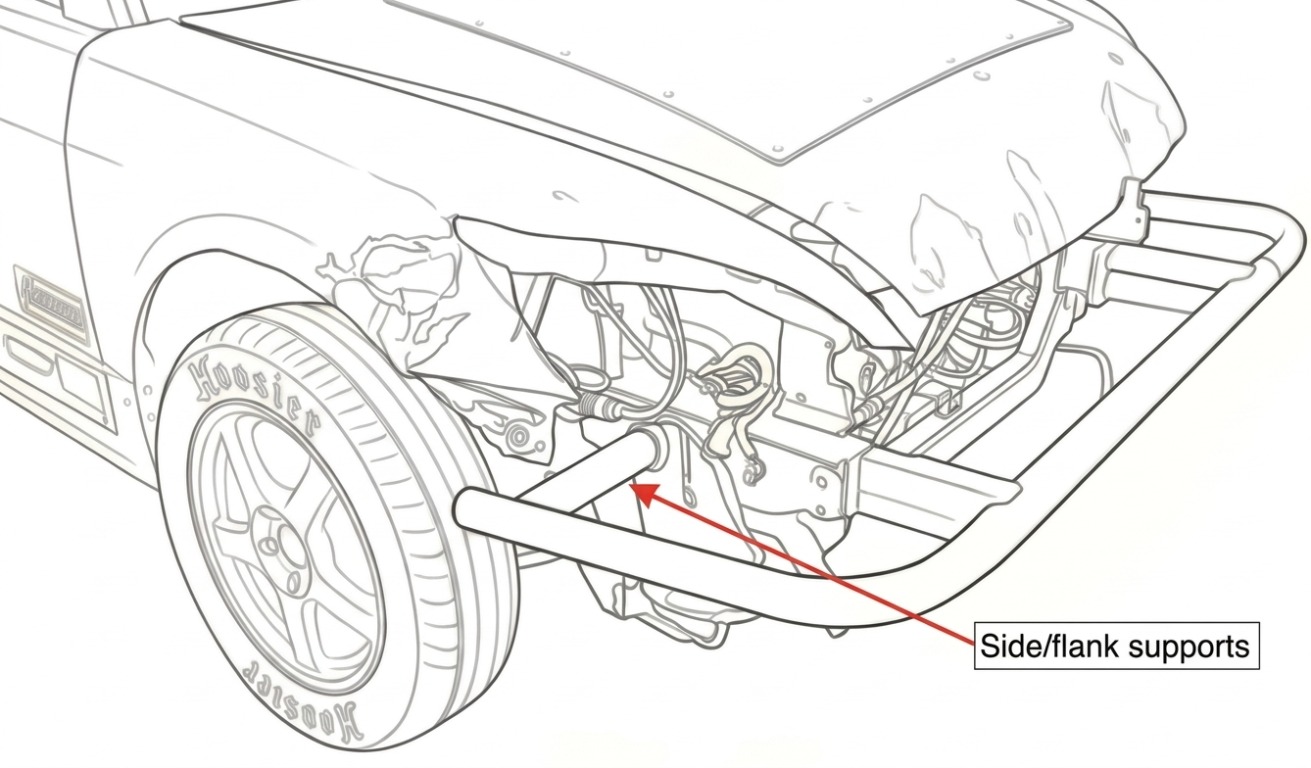
Figure 2. Side/flank supports reinforcing the outer bumper ends.
No Sharp Edges
Tuck and round anything you add that isn’t stock. Don’t have anything sticking out that could puncture a tire or pierce a panel. Bumpers must follow the contour of the car and not extend past the car’s width. If the safety inspector doesn’t like it, be prepared to cut it.
Radiator Protectors
Must be behind your bumper and no larger than 1″ square or round pipe/tube. They can’t extend past where your radiator is mounted. Stay inside the frame rails.
(The best radiator protector is the person behind the steering wheel.)
Transponders
Each car needs two working transponders. They handle lap counting and timing during the FRed Lobster 100. Install them securely and in the proper location. Loose, hidden, backwards, or badly mounted transponders cause missed laps. If you’re unsure where they go, ask another driver or look at a returning car.
| Item | Requirement |
|---|---|
| Per car | Two matching, working transponders |
| Cost | $20 per set (both transponders for one car) |
| Assigned to | A specific car. Switch cars → buy a new set |
Mud Shields
A simple shield can help keep mud from building up on the transponders. Don’t place the shield too close, though — it may cause interference.
Friday Testing
We check all transponders on Friday during the heat races to verify they’re reading on the lap-counting system. If yours don’t register during the heats, you’ll need to replace them before Saturday’s main event.
Save Everyone Time
Transponder issues are one of the biggest things that slow us down on Friday, so check yours ahead of time. If they’re more than two years old, or look faded, cracked, or weathered, go ahead and change them out now.
Recommended Gear
Race Procedures
Race Teams
- Each team must have a minimum of four licensed drivers. Drivers under 18 require parent/guardian consent.
- The driver must have a functioning RACEceiver and respond to communications. Find one on Amazon or at Day Motorsports in Tyler.
- Team drivers must change when instructed to do so.
- Drivers are not allowed to drive multiple shifts in the same car.
- Each team must provide a safety corner flagger if it's determined they'll be needed.
- Pit area is limited to one car length in width.
- ATVs, UTVs, and golf carts are allowed for utility work only on race day.
- No weapons of any kind.
- Drinking is not a requirement.
- Teams must be registered by a predetermined date ($100). A $50 late fee applies after that date. You can pay at the Driver's Meeting or the morning of the race.
- Pre-event driver's meeting attendance is recommended and usually influences a team's starting position.
Driver Changes
Drivers must switch when instructed. One driver cannot run multiple shifts in the same car.
Penalties & Claims
Claims
- Claim amount is $1,500.
- Claim must be made by the end of the 50th lap.
- A claim may only be made by an active race team member.
- Claim is cash in hand to the Safety Coordinator.
- The claimee will be advised of a claim, but not who made it.
- First claim is the claim.
- Teams can deny a claim, but the car is banned for life. The team can continue to participate.
- The Claim Board will decide on any discrepancies.
Important
If you deny a claim, the car is done for good. The team itself can still race other cars.
Rules are subject to change. Always check the latest version before race weekend.
Quick Reference
One-page summary of the most important rules. Print this or keep it on your phone.
Vehicle Requirements
| Item | Rule |
|---|---|
| Engine | 4-cylinder only (no rotary) |
| Drivetrain | 2-wheel-drive only |
| Tires | Unaltered street-tread only |
| Brake light | At least one working |
| Helmet | DOT approved with chin strap |
| Fire extinguisher | 1 in car + 1 in pit |
| Mud flaps | Required on all RWD vehicles at start |
| Bumpers | Stock or limited fabricated (see Technical) |
Team Requirements
| Item | Rule |
|---|---|
| Drivers | Minimum 4 licensed drivers |
| Under 18 | Parent/guardian consent required |
| RACEceiver | Required + must respond |
| Transponders | 2 working units per car ($20/set) |
| Driver changes | Mandatory when instructed |
| Multiple shifts | Not allowed in the same car |
| Registration | $100 by deadline / $50 late fee |
Safety Highlights
- Red flag → Stop immediately
- Black flag → Exit to pits immediately
- Mandatory pit stop for flat tire or causing a red flag
- No kids in the pits
- No weapons of any kind
- Head of Safety decisions are final
Claims
- Amount: $1,500
- Deadline: End of the 50th lap
- Must be cash in hand to Safety Coordinator
- Deny a claim → car is banned for life
Recommended Gear
- RACEceiver on Amazon
- Extra Batteries
- Day Motorsports in Tyler also stocks RACEceivers
Rules
Race Rules Overview
All teams must have four individual drivers for the A Main. The idea behind this race is not one of the smartest we've had. Whether you're racing or watching, you're doing so at your own risk.
Quick Links
- Vehicle Classes
- Technical Specifications (Bumpers & Transponders)
- Race Procedures
- Safety
- Penalties & Claims
Key Requirements at a Glance
| Requirement | Details |
|---|---|
| Drivers per team | Minimum of 4 licensed drivers |
| Vehicle type | 4-cylinder, 2-wheel-drive only |
| Helmet | DOT approved with chin strap |
| Fire extinguisher | 1 in car + 1 in pit |
| Transponders | 2 working units per car |
| RACEceiver | Required and must respond to communications |
| Registration | $100 by deadline, $50 late fee after |
Live Combined Rulebook
This page automatically includes the full rule sections from the individual files below. Any change made to safety.md, classes.md, technical.md, procedures.md, or penalties.md will appear here the next time the site is built.
Safety
Safety is taken seriously, even if the race itself is not. The Head of Safety has the final say on all safety-related decisions.
Required Safety Equipment
- A seat belt, door, and helmet are required for everyone riding in the car.
- Helmets must be DOT approved with a chin strap.
- No batting helmets, bicycle helmets, or hard hats. Those are not legal headgear.
- One fire extinguisher in every car, and one in the pit for every team.
- At least one working brake light when the race starts.
Flags
| Flag | Meaning | Action |
|---|---|---|
| Red | Stop immediately | Pull over and stop. Repeat offenders can expect severe punishment and public embarrassment (TBD). |
| Black | Exit the track | Go to the pits immediately. |
Pit Stops Are Mandatory
You must make a pit stop for any of the following:
- A flat tire
- Causing a red flag
- Multiple non-stops on a red flag
Pit Area Rules
- A valid driver’s license is required to be in the pit area.
- No kids allowed in the pits.
- No weapons of any kind.
- Pit area is limited to one car length in width.
- ATVs, UTVs, and golf carts are allowed for utility work only on race day.
Recommendations
These are not required, but strongly suggested:
- Roll bars.
- Designate a driver, or plan to stay and camp.
- Disengage the air bags.
Conduct
- Rubbing is racing, but be smart about it. This is not a demolition derby.
- Head of Safety decisions are final.
Vehicle Classes
Cars & Trucks
- 4-cylinder vehicles only. No rotary-type engines.
- 2-wheel-drive vehicles only.
- You must have at least one working brake light when the race starts.
- A seat belt, door, and helmet are required for everyone riding in the car. Helmets must be DOT approved with a chin strap. No batting helmets, bicycle helmets, or hard hats; Those are not legal headgear.
- Bumpers. See bumper rules below.
- One fire extinguisher in every car, and one in the pit for every team.
- Unaltered street-tread tires only. No mud terrain, no all terrain, no snow tires.
- All rear-wheel-drive vehicles must start the race with mud flaps.
Simple Summary
4-cylinder, 2WD, street tires, DOT helmet, working brake light, fire extinguisher, and legal bumpers. That’s the core of it.
Technical Specifications
This page covers bumpers, radiator protectors, and transponders.
Bumper Rules
Stock Bumper Preference
Using the original stock bumper is the easiest and preferred option. With this choice, you’ll need to remove the plastic cover.
Permitted Options
Front and rear bumpers are limited to one of the following:
- Original stock bumpers, front and rear.
- A one-piece fabricated bumper constructed of only one (1) single beam/bar, no larger than 1.5″ schedule-40 pipe (2.0" OD), or 2″ × .120 square tubing. Multiple horizontal bars or stacked multi-beam structures are not permitted.
Mounting & Attachment Constraints
- Main supports (Figure 1): Fabricated bumpers must attach to the vehicle frame or chassis using a maximum of two (2) main mounting pillars or posts.
- No chassis reinforcement: The bumper assembly must function strictly as a bumper structure and cannot be used to brace, reinforce, or tie together the vehicle frame, unibody, engine mounts, or other components.
- Side/flank supports (Figure 2): Additional support braces extending to the outer flanks or turned ends are mandatory on side flanks for fabricated bumpers. Each flank must include a minimum of one (1) reinforcement, and supports may connect to either the main bumper structure/posts or the vehicle frame/chassis.
- Note: Side/flank supports are not considered additional chassis reinforcements. They are intended to prevent the bumper ends from flaring out or protruding in the event of an impact.
- Note on Stock Bumpers: Side flanks or turned ends may optionally be added to an original/stock bumper. If added, they must follow the same criteria as fabricated flank supports, limited to only one (1) beam, bar, or tube per side.
Figure 1. Two main bumper support pillars or posts attaching the bumper to the chassis.
Figure 2. Side/flank supports reinforcing the outer bumper ends.
No Sharp Edges
Tuck and round anything you add that isn’t stock. Don’t have anything sticking out that could puncture a tire or pierce a panel. Bumpers must follow the contour of the car and not extend past the car’s width. If the safety inspector doesn’t like it, be prepared to cut it.
Radiator Protectors
Must be behind your bumper and no larger than 1″ square or round pipe/tube. They can’t extend past where your radiator is mounted. Stay inside the frame rails.
(The best radiator protector is the person behind the steering wheel.)
Transponders
Each car needs two working transponders. They handle lap counting and timing during the FRed Lobster 100. Install them securely and in the proper location. Loose, hidden, backwards, or badly mounted transponders cause missed laps. If you’re unsure where they go, ask another driver or look at a returning car.
| Item | Requirement |
|---|---|
| Per car | Two matching, working transponders |
| Cost | $20 per set (both transponders for one car) |
| Assigned to | A specific car. Switch cars → buy a new set |
Mud Shields
A simple shield can help keep mud from building up on the transponders. Don’t place the shield too close, though — it may cause interference.
Friday Testing
We check all transponders on Friday during the heat races to verify they’re reading on the lap-counting system. If yours don’t register during the heats, you’ll need to replace them before Saturday’s main event.
Save Everyone Time
Transponder issues are one of the biggest things that slow us down on Friday, so check yours ahead of time. If they’re more than two years old, or look faded, cracked, or weathered, go ahead and change them out now.
Recommended Gear
Race Procedures
Race Teams
- Each team must have a minimum of four licensed drivers. Drivers under 18 require parent/guardian consent.
- The driver must have a functioning RACEceiver and respond to communications. Find one on Amazon or at Day Motorsports in Tyler.
- Team drivers must change when instructed to do so.
- Drivers are not allowed to drive multiple shifts in the same car.
- Each team must provide a safety corner flagger if it's determined they'll be needed.
- Pit area is limited to one car length in width.
- ATVs, UTVs, and golf carts are allowed for utility work only on race day.
- No weapons of any kind.
- Drinking is not a requirement.
- Teams must be registered by a predetermined date ($100). A $50 late fee applies after that date. You can pay at the Driver's Meeting or the morning of the race.
- Pre-event driver's meeting attendance is recommended and usually influences a team's starting position.
Driver Changes
Drivers must switch when instructed. One driver cannot run multiple shifts in the same car.
Penalties & Claims
Claims
- Claim amount is $1,500.
- Claim must be made by the end of the 50th lap.
- A claim may only be made by an active race team member.
- Claim is cash in hand to the Safety Coordinator.
- The claimee will be advised of a claim, but not who made it.
- First claim is the claim.
- Teams can deny a claim, but the car is banned for life. The team can continue to participate.
- The Claim Board will decide on any discrepancies.
Important
If you deny a claim, the car is done for good. The team itself can still race other cars.
Appendices
FRed Lobster 100 Rulebook
Official competition rules and technical regulations for the FRed Lobster 100.
Enter at Your Own Risk
The idea behind this race is not one of the smartest we've had. Whether you're racing or watching, you're doing so at your own risk.
Printable Version
📄 Download / Print Full Rulebook
Opens a single page of the entire rulebook. Use your browser’s Print → Save as PDF and select Letter paper size.
Start Here
- Quick Reference — One-page summary of the most important rules
- Race Rules Overview — Full breakdown of the rules
Rule Sections
| Section | What's Covered |
|---|---|
| Safety | Flags, equipment, pit rules, recommendations |
| Vehicle Classes | Allowed cars, tires, basic requirements |
| Technical Specifications | Bumpers, radiator protectors, transponders |
| Race Procedures | Teams, drivers, registration, RACEceiver |
| Penalties & Claims | Claim process and amounts |
Need Gear?
- RACEceiver on Amazon
- Extra Batteries
- Also available at Day Motorsports in Tyler
Rules are subject to change. Always check the latest version before race weekend.
Full Rules
This page includes the full rule sections from the separate rule documents below. Any change made to the individual rule files will appear here the next time the site is built.
Safety
Safety is taken seriously, even if the race itself is not. The Head of Safety has the final say on all safety-related decisions.
Required Safety Equipment
- A seat belt, door, and helmet are required for everyone riding in the car.
- Helmets must be DOT approved with a chin strap.
- No batting helmets, bicycle helmets, or hard hats. Those are not legal headgear.
- One fire extinguisher in every car, and one in the pit for every team.
- At least one working brake light when the race starts.
Flags
| Flag | Meaning | Action |
|---|---|---|
| Red | Stop immediately | Pull over and stop. Repeat offenders can expect severe punishment and public embarrassment (TBD). |
| Black | Exit the track | Go to the pits immediately. |
Pit Stops Are Mandatory
You must make a pit stop for any of the following:
- A flat tire
- Causing a red flag
- Multiple non-stops on a red flag
Pit Area Rules
- A valid driver’s license is required to be in the pit area.
- No kids allowed in the pits.
- No weapons of any kind.
- Pit area is limited to one car length in width.
- ATVs, UTVs, and golf carts are allowed for utility work only on race day.
Recommendations
These are not required, but strongly suggested:
- Roll bars.
- Designate a driver, or plan to stay and camp.
- Disengage the air bags.
Conduct
- Rubbing is racing, but be smart about it. This is not a demolition derby.
- Head of Safety decisions are final.
Vehicle Classes
Cars & Trucks
- 4-cylinder vehicles only. No rotary-type engines.
- 2-wheel-drive vehicles only.
- You must have at least one working brake light when the race starts.
- A seat belt, door, and helmet are required for everyone riding in the car. Helmets must be DOT approved with a chin strap. No batting helmets, bicycle helmets, or hard hats; Those are not legal headgear.
- Bumpers. See bumper rules below.
- One fire extinguisher in every car, and one in the pit for every team.
- Unaltered street-tread tires only. No mud terrain, no all terrain, no snow tires.
- All rear-wheel-drive vehicles must start the race with mud flaps.
Simple Summary
4-cylinder, 2WD, street tires, DOT helmet, working brake light, fire extinguisher, and legal bumpers. That’s the core of it.
Technical Specifications
This page covers bumpers, radiator protectors, and transponders.
Bumper Rules
Stock Bumper Preference
Using the original stock bumper is the easiest and preferred option. With this choice, you’ll need to remove the plastic cover.
Permitted Options
Front and rear bumpers are limited to one of the following:
- Original stock bumpers, front and rear.
- A one-piece fabricated bumper constructed of only one (1) single beam/bar, no larger than 1.5″ schedule-40 pipe (2.0" OD), or 2″ × .120 square tubing. Multiple horizontal bars or stacked multi-beam structures are not permitted.
Mounting & Attachment Constraints
- Main supports (Figure 1): Fabricated bumpers must attach to the vehicle frame or chassis using a maximum of two (2) main mounting pillars or posts.
- No chassis reinforcement: The bumper assembly must function strictly as a bumper structure and cannot be used to brace, reinforce, or tie together the vehicle frame, unibody, engine mounts, or other components.
- Side/flank supports (Figure 2): Additional support braces extending to the outer flanks or turned ends are mandatory on side flanks for fabricated bumpers. Each flank must include a minimum of one (1) reinforcement, and supports may connect to either the main bumper structure/posts or the vehicle frame/chassis.
- Note: Side/flank supports are not considered additional chassis reinforcements. They are intended to prevent the bumper ends from flaring out or protruding in the event of an impact.
- Note on Stock Bumpers: Side flanks or turned ends may optionally be added to an original/stock bumper. If added, they must follow the same criteria as fabricated flank supports, limited to only one (1) beam, bar, or tube per side.
Figure 1. Two main bumper support pillars or posts attaching the bumper to the chassis.
Figure 2. Side/flank supports reinforcing the outer bumper ends.
No Sharp Edges
Tuck and round anything you add that isn’t stock. Don’t have anything sticking out that could puncture a tire or pierce a panel. Bumpers must follow the contour of the car and not extend past the car’s width. If the safety inspector doesn’t like it, be prepared to cut it.
Radiator Protectors
Must be behind your bumper and no larger than 1″ square or round pipe/tube. They can’t extend past where your radiator is mounted. Stay inside the frame rails.
(The best radiator protector is the person behind the steering wheel.)
Transponders
Each car needs two working transponders. They handle lap counting and timing during the FRed Lobster 100. Install them securely and in the proper location. Loose, hidden, backwards, or badly mounted transponders cause missed laps. If you’re unsure where they go, ask another driver or look at a returning car.
| Item | Requirement |
|---|---|
| Per car | Two matching, working transponders |
| Cost | $20 per set (both transponders for one car) |
| Assigned to | A specific car. Switch cars → buy a new set |
Mud Shields
A simple shield can help keep mud from building up on the transponders. Don’t place the shield too close, though — it may cause interference.
Friday Testing
We check all transponders on Friday during the heat races to verify they’re reading on the lap-counting system. If yours don’t register during the heats, you’ll need to replace them before Saturday’s main event.
Save Everyone Time
Transponder issues are one of the biggest things that slow us down on Friday, so check yours ahead of time. If they’re more than two years old, or look faded, cracked, or weathered, go ahead and change them out now.
Recommended Gear
Race Procedures
Race Teams
- Each team must have a minimum of four licensed drivers. Drivers under 18 require parent/guardian consent.
- The driver must have a functioning RACEceiver and respond to communications. Find one on Amazon or at Day Motorsports in Tyler.
- Team drivers must change when instructed to do so.
- Drivers are not allowed to drive multiple shifts in the same car.
- Each team must provide a safety corner flagger if it's determined they'll be needed.
- Pit area is limited to one car length in width.
- ATVs, UTVs, and golf carts are allowed for utility work only on race day.
- No weapons of any kind.
- Drinking is not a requirement.
- Teams must be registered by a predetermined date ($100). A $50 late fee applies after that date. You can pay at the Driver's Meeting or the morning of the race.
- Pre-event driver's meeting attendance is recommended and usually influences a team's starting position.
Driver Changes
Drivers must switch when instructed. One driver cannot run multiple shifts in the same car.
Penalties & Claims
Claims
- Claim amount is $1,500.
- Claim must be made by the end of the 50th lap.
- A claim may only be made by an active race team member.
- Claim is cash in hand to the Safety Coordinator.
- The claimee will be advised of a claim, but not who made it.
- First claim is the claim.
- Teams can deny a claim, but the car is banned for life. The team can continue to participate.
- The Claim Board will decide on any discrepancies.
Important
If you deny a claim, the car is done for good. The team itself can still race other cars.
Glossary
Quick definitions of terms used throughout the rulebook.
| Term | Definition |
|---|---|
| A Main | The main event race. Requires four individual drivers per team. |
| Black Flag | Signal to exit the track and go to the pits immediately. |
| Claim | A $1,500 cash offer to purchase another team’s car. Must be made by the end of the 50th lap. |
| Claim Board | Group that decides disputes related to claims. |
| DOT Helmet | Department of Transportation approved helmet with a chin strap. Required for all occupants. |
| Head of Safety | Official whose decisions on safety matters are final. |
| Mud Flaps | Required on all rear-wheel-drive vehicles at the start of the race. |
| Pit Area | Designated area for teams. Limited to one car length in width. No kids allowed. |
| RACEceiver | One-way radio receiver required for all drivers so they can hear race control. |
| Red Flag | Signal to stop immediately. Repeat non-compliance can result in severe punishment. |
| Stock Bumper | Original factory bumper (plastic cover removed). Preferred option. |
| Street-Tread Tires | Unaltered passenger car tires. Mud, all-terrain, and snow tires are prohibited. |
| Transponder | Electronic device used for lap counting and timing. Two working units required per car. |
Changelog
Record of updates to the official rulebook.
2026 Season
October 6, 2026
- Clarified that fabricated bumpers are limited to one beam, including optional stock-bumper flanks
October 5, 2026
- Replaced the side/flank support diagram on the Technical Specifications page
October 3, 2026
- Clarified bumper rules for stock bumper preference and permitted fabrication options
- Added clearer mounting and side/flank support requirements
- Added a safety note clarifying that side/flank supports are not additional chassis reinforcements
- Updated the Technical Specifications page wording for consistency and enforcement clarity
July 28, 2026
- Initial MkDocs version of the rulebook published
- Content transferred from original race-cars page
- Added Quick Reference page
- Added Glossary
- Structured rules into Safety, Classes, Technical, Procedures, and Penalties sections
Future rule changes will be listed here with the date they take effect.